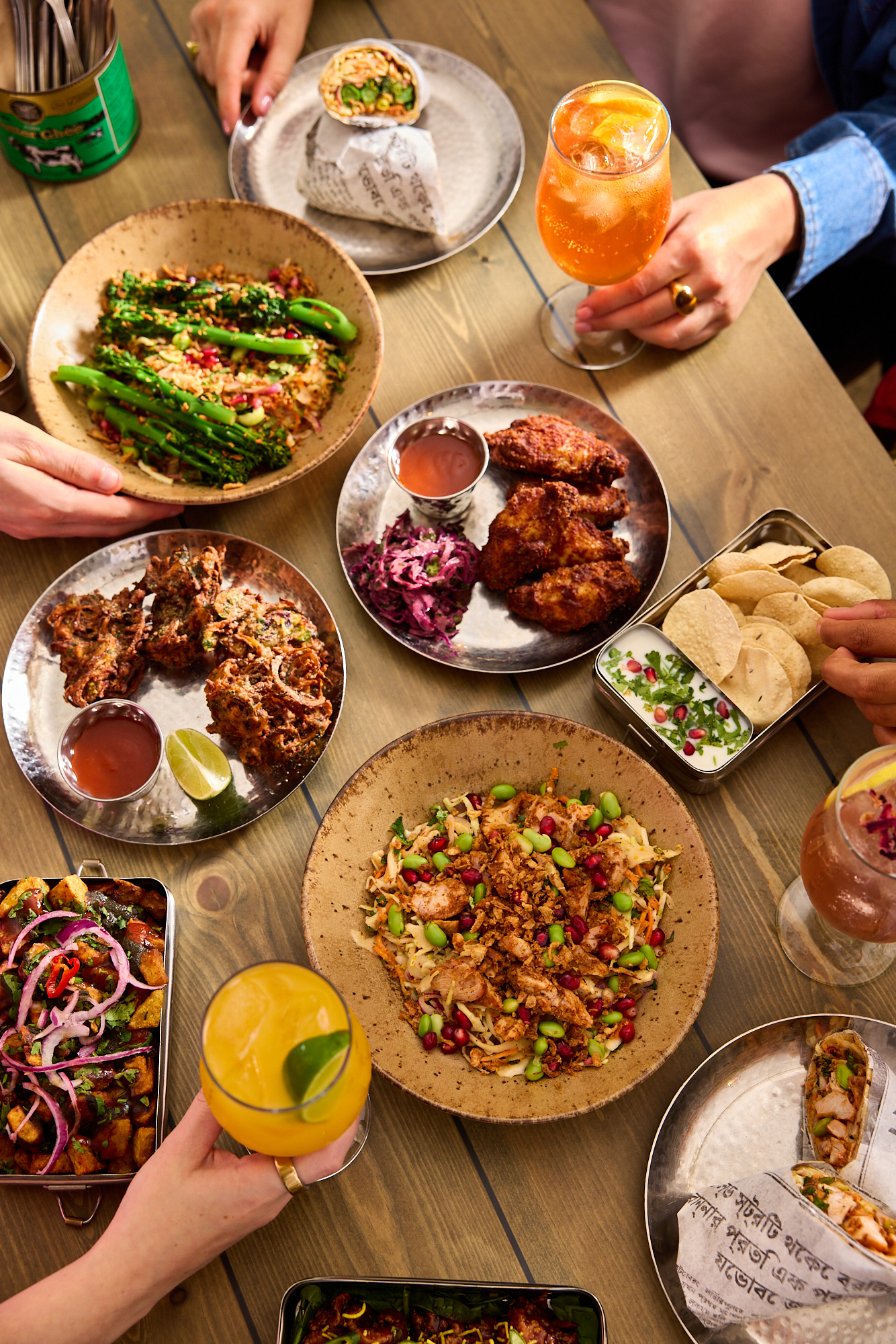
A combination of spices: how Indian street food is made
Have you ever found yourself sitting at a table at an Indian restaurant in the UK, watching a bowl of steaming dhal arrive and wondering, “Why does my kitchen at home never smell like this?”. If you have, don’t worry, because you’re not alone. There is a specific kind of magic that happens in the making of Indian street food. It’s a bit of a complex, choreographed mixture of aromatics that hits every single one of your taste buds at the exact same time.
To understand what spices are used in Indian food, you have to stop thinking about spice as a way to make food hot or spicy. In the streets of Varanasi or the home kitchens of London, spices are used like colours on a canvas. Some are there for the vibrant glow, some for the earthy notes, and some just to give you that cheeky little zing that makes you want to lick the bowl.
Let’s lift the lid on the spice tin and look at the common spices in Indian food that create that unmistakable, addictive taste.
The holy trinity of aromatics
Before we even reach for the spice tin, we have to talk about the holy trinity. Almost every great dish, from the street stalls of Mumbai to a dining table in Edinburgh, starts with a sizzle that could wake the neighbours. If you walk into a kitchen and smell something heavenly, you aren’t actually smelling the spice yet. What you’re smelling are the aromatics.
In Indian food, spices need a carrier to wake them up. Think of these aromatics as the stage, and the spices as the rockstars that perform on it. Without a solid stage, the performance just falls flat. This trinity consists of onions, garlic, and ginger.
The onions
In Western cooking, you might just fry an onion until it’s translucent. In the world of Indian food spices, that’s barely getting started. We treat onions with a bit more… intensity.
The secret to that deep, rich Indian home taste you find is the browning of the onions. We cook them down until the sugars inside caramelise, turning them from sharp and crunchy into something golden, jammy, and sweet. This process, known as “Bhuna”, is what gives a curry its body. It’s the difference between a thin, watery sauce and a rich, lip-smacking gravy.
The garlic
Next up is garlic. But we don’t just toss in a single clove and call it a day. In Indian street food, garlic is used generously. When it hits that hot oil alongside the browning onions, it loses its bite and develops a mellow, buttery depth.
Whether you’re tucked into a booth in Leeds or grabbing a quick bite in London, you’ll notice that the garlic is never bitter. That’s because it’s added at the perfect time, which is after the onions have started to caramelise but before they’re done. This is how we make sure that the garlic toasts without burning.
The ginger
Finally, we have ginger. If onions are the body and garlic is the soul, ginger is the lightning bolt. It adds a woody, peppery heat that is completely different from the fire of a chilli. Among common spices in Indian food, ginger acts as a digestive aid, but, culinary-wise, it’s there to provide a high note to balance the heavy, earthy flavours of the meat or lentils.
If you want to know how the pros do it in India, they often combine the garlic and ginger into a fresh paste. By crushing them together, you break the cell walls and release all those volatile oils.
Why are these aromatics so important?
We like to think of this aromatic base as the foundation of the Indian street food house. You can buy the most expensive Indian food spices in the world, but if you throw them into a pan with raw onions and cold oil, they’ll taste dusty and flat.
Spices are fat-soluble, which means they need to be in that hot, aromatic-infused oil to unlock their true potential. It’s why a simple Picnic Potato Curry can taste so incredibly layered. It all starts with the patience shown to the onions, ginger, and garlic at the very beginning.
What spices are used in Indian food?
Once the aromatic foundation is laid, the real fun begins. Walk into any spice market in India, and you’ll see the Masala Danni. This is the often circular spice box that holds the heartbeat of the kitchen. Every cook has their own ratio, but there are several heavy hitters that define the taste of Indian street food.
Understanding the common spices used in Indian food is about understanding balance. It’s a game of tug-of-war between earthy, bitter, spicy, and sour. Here is the lineup of essentials that turn basic ingredients into a street-food delight.
Cumin and coriander
If Indian food had a heartbeat, it would be the rhythm of cumin and coriander. These are perhaps the most common spices in Indian food, but they play very different roles.
- Cumin: When dropped into hot oil, these little seeds pop, releasing a nutty, smoky aroma that grounds the dish. It’s that deep, savoury smell that greets you the moment you walk into a great Indian restaurant.
- Coriander: Not to be confused with the fresh green herb, coriander seeds are citrusy, light, and slightly floral. When ground up, they connect the heavy, earthy flavours with the bright, citrusy ones.
These two spices are not necessarily there to burn or add a bit of zing. Their role is more about bringing a balanced flavour and earthy taste to any dish.
Turmeric
You can’t talk about spices in Indian food without mentioning the star of the show, Turmeric. It’s famous for its bright yellow colour (and for staining your favourite white t-shirt if you aren’t careful), but its flavour is subtle. It’s slightly bitter and woody.
In India, turmeric is treated with a whole lot of respect. It’s as much a medicine as it is an ingredient. It’s an anti-inflammatory powerhouse. When you see that beautiful golden hue in a Temple Dahl, for example, that’s turmeric doing its job. It provides a background warmth that makes everything else look and taste as if it has come straight out of a kitchen in Mumbai.
Tamarind and amchoor
This is where Indian street food really brings the flavour and moves away from the heavier, creamier curries of the past. Street food is all about the zing.
If you’re dining at an Indian restaurant, perhaps in Newcastle or Sheffield, and you find yourself puckering your lips in delight, you’ve likely met tamarind. It’s a sticky, sour fruit that provides a deep, tangy sweetness. It’s the backbone of the brown sauce you see drizzled over street snacks.
Then there’s amchoor, which is essentially dried green mango powder. It’s a spice used for adding a sharp, fruity tartness without adding liquid. It’s why street food feels so bright and alive compared to a heavy stew.
Chillies
Let’s address the elephant in the room: the heat. Yes, Indian food uses chillies, but it’s rarely just about how much pain a dish could inflict on you. There are dozens of varieties, from the mild, smoky Kashmiri chilli (which gives food a deep red colour without burning a hole in the plate) to the tiny, fiery bird’s eye chillies that pack a punch.
In the kitchens preparing Indian street food, the goal is more of a balanced heat. You want a glow that builds at the back of the throat, not a fire that numbs your tongue. It’s the difference between a dish that is just hot and a dish that is properly spiced.
Garam masala
If you’ve ever looked at a recipe for Indian food, you’ve probably seen the words Garam Masala. But did you know that the term “Garam Masala” isn’t a single spice? It actually translates to “Warm Spice Mix.”
Every family has their own special version. It usually involves cinnamon, cloves, cardamom, and black pepper. Unlike the other spices, this is often added at the very end of cooking. It’s like a sprinkle of flavour that adds a floral, sweet aroma to the steam rising off your plate.
How the aromatics and spices come together
So, how is the Indian street food actually made? It’s all about the tempering, which is the process of frying whole spices in hot oil or ghee until they sizzle and pop, then pouring that flavoured oil, spices and all, over the dish at the end.
This technique is what gives Indian street food its layers. You get the soft, slow-cooked spices in the sauce, and the bright, popping spices on top. It’s why a meal from an Indian restaurant can taste different with every single bite.
One of the best ways to experience this variety is through the Tiffin. In India, these stacked tins are filled with different dishes, maybe a spicy meat dish, a cooling dhal, and a zingy vegetable side. It’s a smash-and-grab way to eat, ensuring you get a bit of every spice we’ve mentioned.
Experience the spice at Mowgli
If all this talk of toasted cumin and tangy tamarind has you craving a feast, it’s time to head to the source. At Mowgli, we don’t hide our spices behind heaps of cream or sugar. We let them shine.
We started Mowgli to show the UK what Indian food looks like in a real Indian home. Our recipes are the ones Indian families grow up with, simple, fresh, and bursting with the common spices that we’ve gone over in this blog.
Whether you’re swinging on our signature gold-roped seats in Manchester or tucked away in our beautiful home in Bristol, the experience is the same. It’s about honest, addictive flavours.
Want to see these spices in action?
- Try our Yoghurt Chat Bombs for that addictive hit of tamarind and amchoor.
- Grab the Temple Dahl to taste the earthy, golden warmth of turmeric and cumin.
- Get into an Office Worker’s Tiffin for a journey through the different spice profiles we offer.
We don’t do traditional restaurant food; we do the food that Indians eat on the streets and at their kitchen tables. It’s bright, it’s bold, and it’s a little bit cheeky, just like us.
Ready to spice up your life? Book your table at Mowgli today and let us show you how real Indian street food is made and enjoyed.